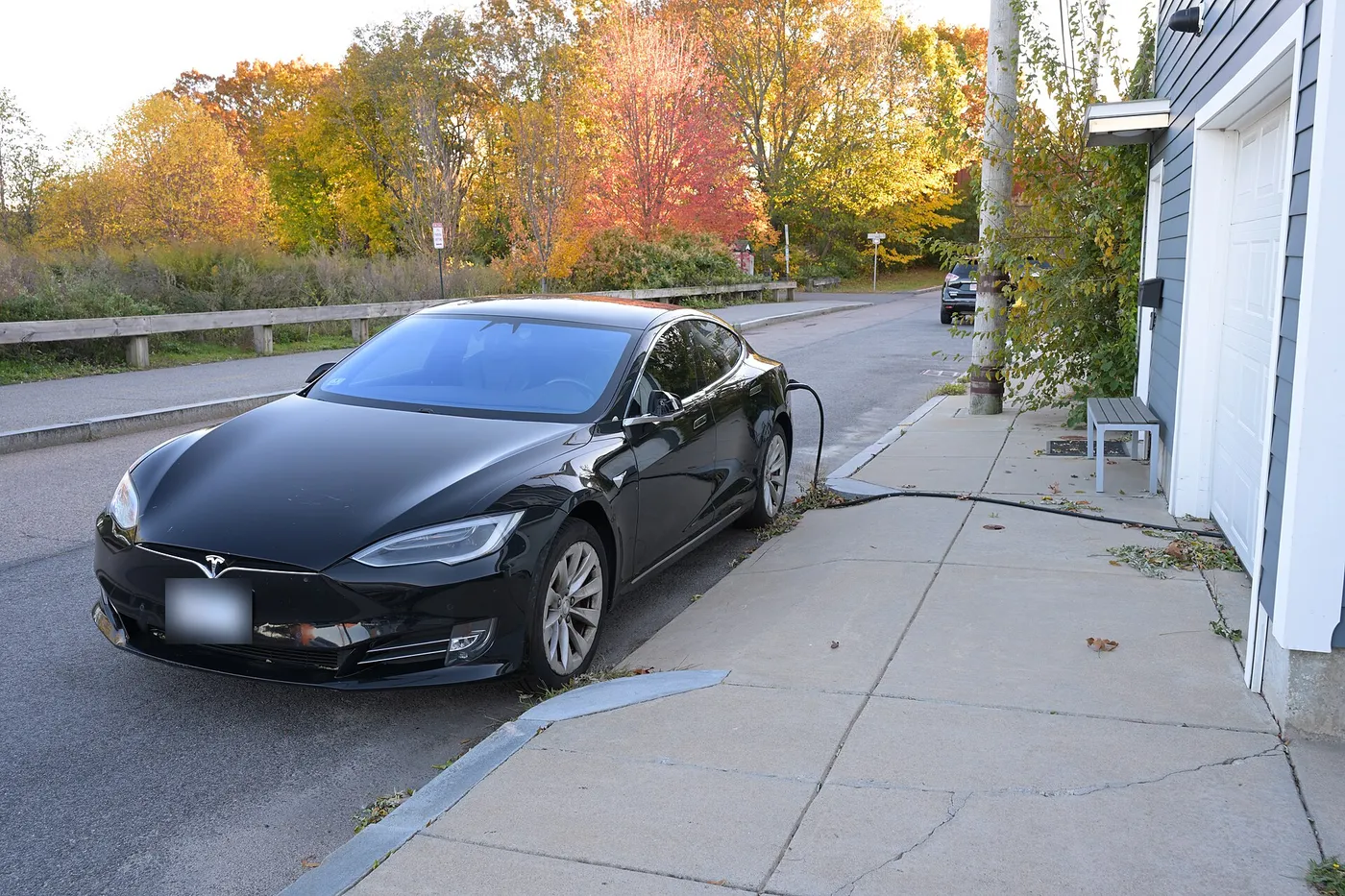
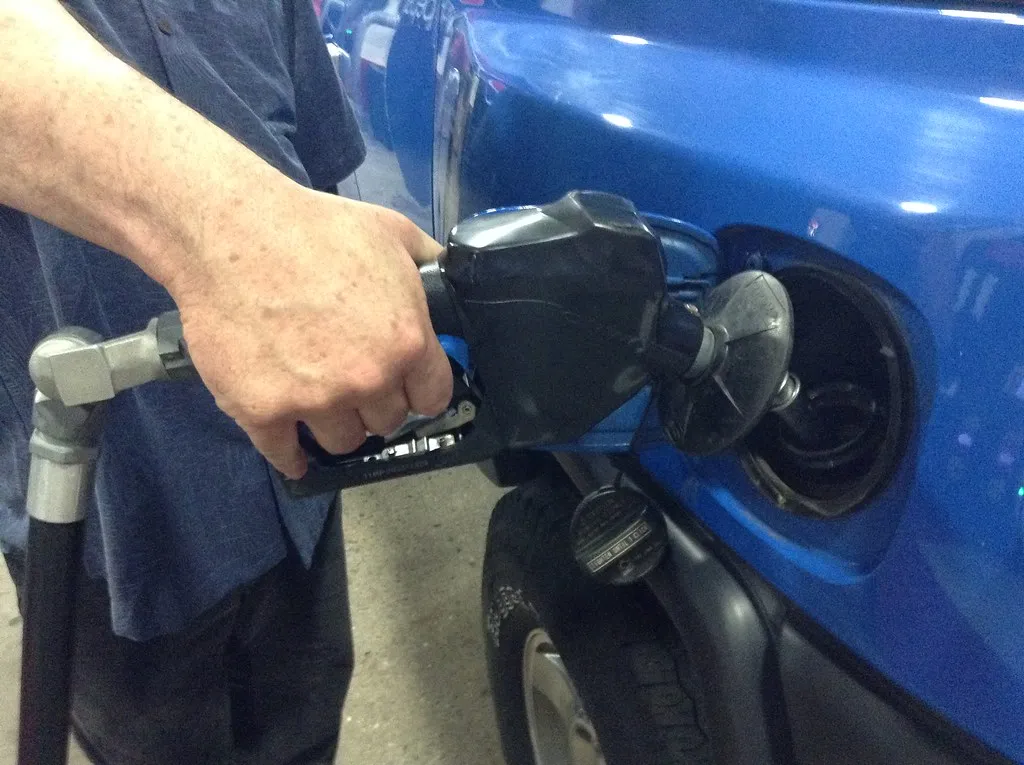
At the pump, you buy gallons. At home, your meter counts kilowatt-hours. Two units, two bills, and almost nobody ever lines them up.
But a gallon of gasoline is just energy in a can. And energy can be counted in kilowatt-hours, the same unit as your electric bill.
The EPA already does this math. It's how every new car's window sticker gets its “MPGe.”
Two SUVs, one drive
Take two popular SUVs of about the same size. One is a 2024 Toyota RAV4 with all-wheel drive. The other is a 2024 Tesla Model Y Long Range.
Now send each one on the same 100-mile drive.
The RAV4 is rated at 28 miles a gallon, so 100 miles takes about 3.6 gallons. At 33.7 kWh a gallon, that's 120 kWh of energy.
The Model Y is rated in kWh already: 28.7 kWh per 100 miles. That even counts the energy lost while it charges.
Here's what that looks like.
Same size. Same 100 miles. 76% less energy.
Where does the rest go?
Mostly, it becomes heat.
A gas engine runs on small explosions. They push the car, but they also warm the engine block, the radiator, and the exhaust. The EPA says most of the fuel's energy is lost in the engine, primarily as heat.
An electric motor has no fire to feed. Far more of what goes in comes out as motion.
What it means at home
Charge at home, and those miles move from the gas station to your electric bill.
How much? Multiply your miles by your car's rating. The Model Y uses 0.29 kWh a mile.
A 30-mile day comes to about 9 kWh. An average U.S. home used about 30 kWh a day in 2022, according to the EIA.
With solar on the roof, some of those miles can come from your own panels.
Your own car's rating is on fueleconomy.gov, listed as kWh per 100 miles.
The bottom line
An electric car goes just as far on about a quarter of the energy. Most of a gas car's fuel is lost as heat.
Want to track your home energy use separately from your EV charging?
Link your charger, and WattHacker shows your home's use and your car's charging apart, day by day.
- Works today with an Emporia EV charger, or a Tesla Wall Connector on a home with a Powerwall.
- See what the car took each day, next to what your solar made.
- The live view is free. Gigawatt keeps the history: $199 once, monitor and shipping included, backed by a 30-day money-back guarantee.
Common questions
How many kWh does an electric car use per mile?
It depends on the car; each one is rated in kWh per 100 miles on fueleconomy.gov. The EPA rates a 2024 Tesla Model Y Long Range at 28.7 kWh per 100 miles, which is 0.29 kWh per mile, and that figure includes the energy lost while charging.
How does that compare with a gas car?
A gallon of gasoline holds the energy of 33.7 kWh, the figure the EPA uses for MPGe. A 2024 Toyota RAV4 AWD gets 28 mpg, so 100 miles takes about 3.6 gallons: the energy of about 120 kWh. The electric SUV does the same 100 miles on about 29 kWh, roughly a quarter.
Why do electric cars use so much less energy?
Far less of it is lost as heat. The EPA says electric cars turn over 77% of the electricity from the grid into power at the wheels, while gas cars turn only about 12% to 30% of the energy in gasoline into motion. Most of the rest is lost in the engine, primarily as heat.
How much will charging add to my home's electricity use?
Multiply your miles by your car's kWh per mile. At 0.29 kWh per mile, 30 miles a day is about 8.7 kWh a day. The average U.S. home bought about 29.6 kWh a day in 2022, according to the EIA. Your car's own rating is on fueleconomy.gov, listed as kWh per 100 miles.
 See every panel again For SunPower and Enphase solar.
See your own panels, live.
See plans Try the demo Back to home