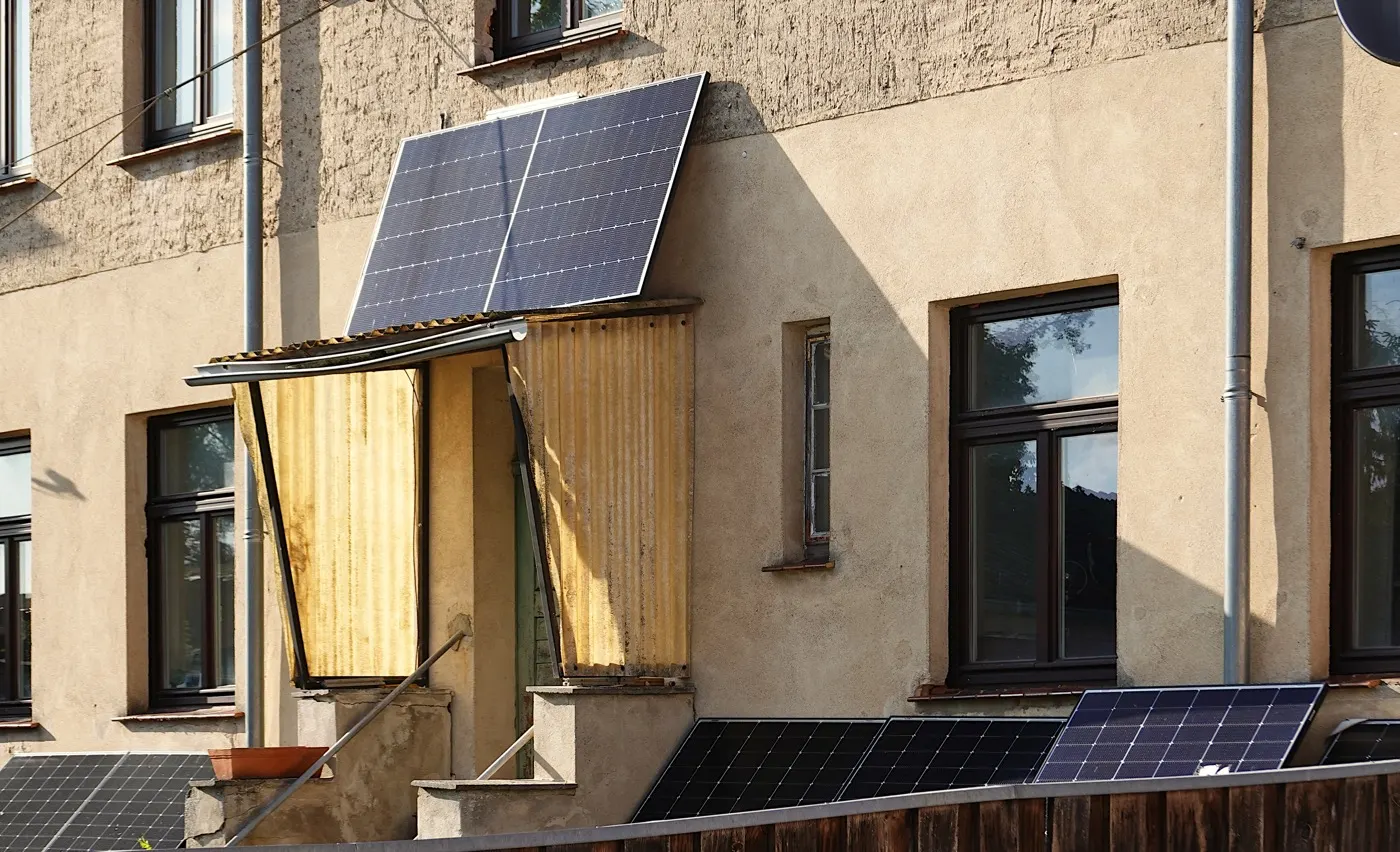
A kit's box gives its watts: 400 W, 800 W, or 1,200 W. That's how much power the panels make in strong, direct sun, at one moment.
What lowers your bill is kilowatt-hours: that power, added up over every sunny hour of the year.
That depends on where you live, which way your balcony faces, and how the panel hangs. So we ran the numbers.
One panel, six cities
We used PVGIS, a solar model from the European Commission's research center that covers the U.S., with 19 years of weather. We modeled a 400 W panel facing south with no shade, two ways: hung straight down on a railing, and tilted at 30° like a typical roof.
In Los Angeles, a railing panel makes about 426 kWh a year. That's a little over 1 kWh a day. The average U.S. home uses about 30 kWh a day, according to the EIA.
Denver comes out on top for railings. In winter the sun sits low, nearly square on to an upright panel, and Denver's winter skies are often clear.
Your own numbers: the balcony solar predictor works it out for your ZIP and the way your balcony faces, with the best angle to set it at.
Hung straight down, a panel makes 61% to 70% of what it makes tilted.
Why a railing costs you power
A solar panel makes the most when the sun hits it square on.
In summer, the midday sun is high overhead. It strikes an upright panel at a glancing angle, so the panel catches only part of it.
The farther south you live, the higher the summer sun, and the bigger the loss. A railing panel keeps only 61% of a tilted panel's output in Phoenix, against 70% in Seattle.
That's why German figures, which often put the loss at 15% to 20%, don't carry over to most of the U.S.
Which way your balcony faces
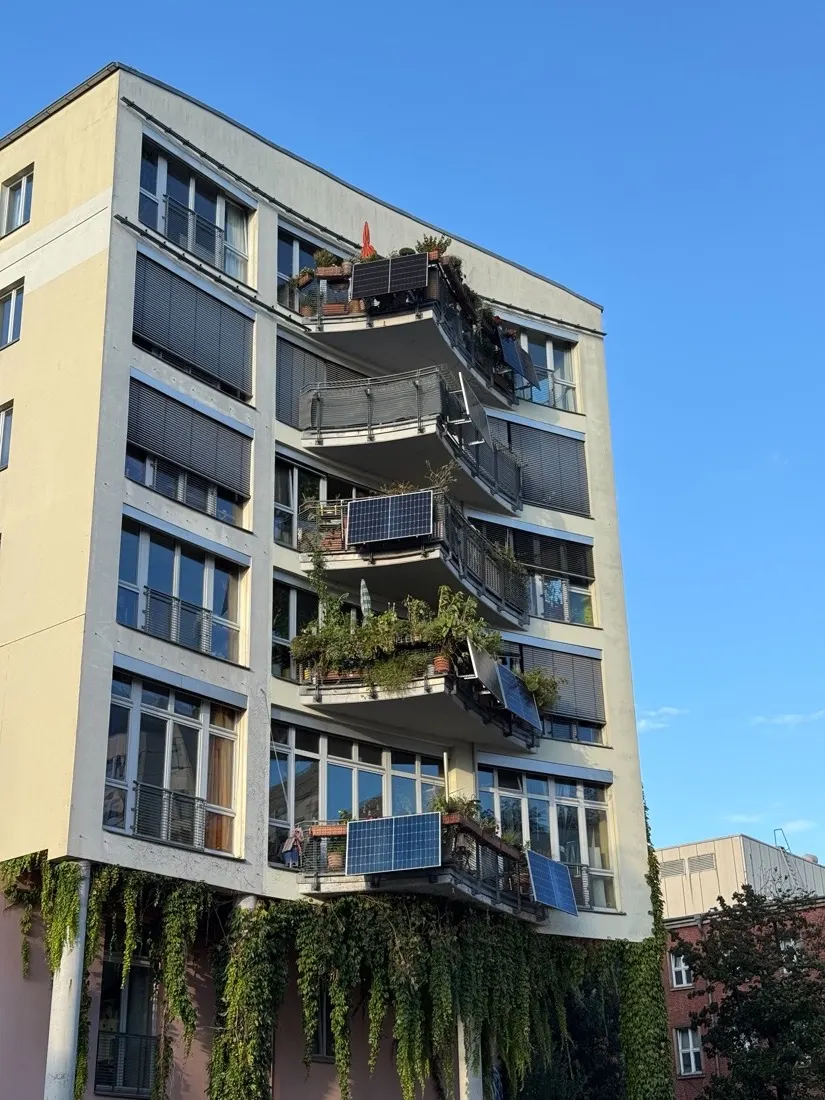
South is best. In Los Angeles, east and west make about a fifth less, but they make it in the morning or the evening.
That can be useful. A west-facing panel still produces in the late afternoon, when many homes start cooking and running the AC.
What lowers these numbers
- Shade. A balcony above, a wall, or a tree can cut output far more than direction does. None of our numbers include shade.
- Dirt. A panel by a busy road gets grimy. Rain helps; a wipe helps more.
- The inverter's limit. A kit with more panel watts than inverter watts throws away its peak. On a railing that's rare, because an upright panel seldom reaches its full rating.
- Power you don't use. Output your home can't use at the moment flows out to the grid, usually for nothing. Why that matters for kit size.
The bottom line
Expect about 1 kWh a day from each 400 W panel on a railing. Tilt it toward the sun, and keep it out of shade, for more.
Already have solar on the roof?
Before you buy a plug-in kit, find out whether your house is already sending power to the grid at midday. If it is, a plug-in kit mostly adds to that export instead of cutting your bill. The WattHacker monitor shows your rooftop production live, panel by panel. It plugs into the SunPower or Enphase gateway you already own.
- Home use is shown too where your system was installed with consumption meters. Without them you see production only. Your utility's hourly usage download also shows export.
- A plug-in kit is a separate inverter. Your rooftop gateway will not count its production, so neither will we.
- Free to see your panel data, with no subscription. The monitor is a one-time purchase with a 30-day money-back guarantee.
Still have questions about your own system? I'll go through it with you — your panels, your bill, and what's worth doing about it.
Book an energy reviewAre your panels installed by SunPower or Enphase? See how it works for SunPower or Enphase, or see a demo.
Real panels, real production.
Common questions
How much electricity does a balcony solar panel produce?
A 400 W panel hung on a south-facing railing makes about 426 kWh a year in Los Angeles, 381 in New York, and 323 in Seattle, by our model. That is roughly 1.2 kWh a day in Los Angeles, before any shade.
How much does an 800 W balcony solar system produce?
About twice a 400 W panel: roughly 852 kWh a year on a south-facing railing in Los Angeles, 761 kWh in New York, and 1,007 kWh in Denver. Tilted at 30° the same panels would make 1,424 kWh in Los Angeles.
Does a vertical balcony panel produce less?
Yes. Hung straight down on a railing, a south-facing panel makes 61% to 70% of what it would make tilted at 30°, in the six U.S. cities we modeled. The loss is largest in sunny, southern cities, where the summer sun is high overhead.
Can balcony solar work facing east or west?
Yes, with less output. In Los Angeles a 400 W panel on a railing makes about 426 kWh a year facing south, 344 facing west, and 339 facing east. A north-facing balcony gets little direct sun.
Why are vendors' numbers higher?
Many quote a panel tilted toward the sun, with no shade. Bright Saver's 'up to 270 kWh a year' for a 180 W panel works out to 1,500 kWh per kW of panels. On a south-facing railing in Los Angeles, our model gives about 1,065.
See your own panels, live.
See plans Try the demo Back to home