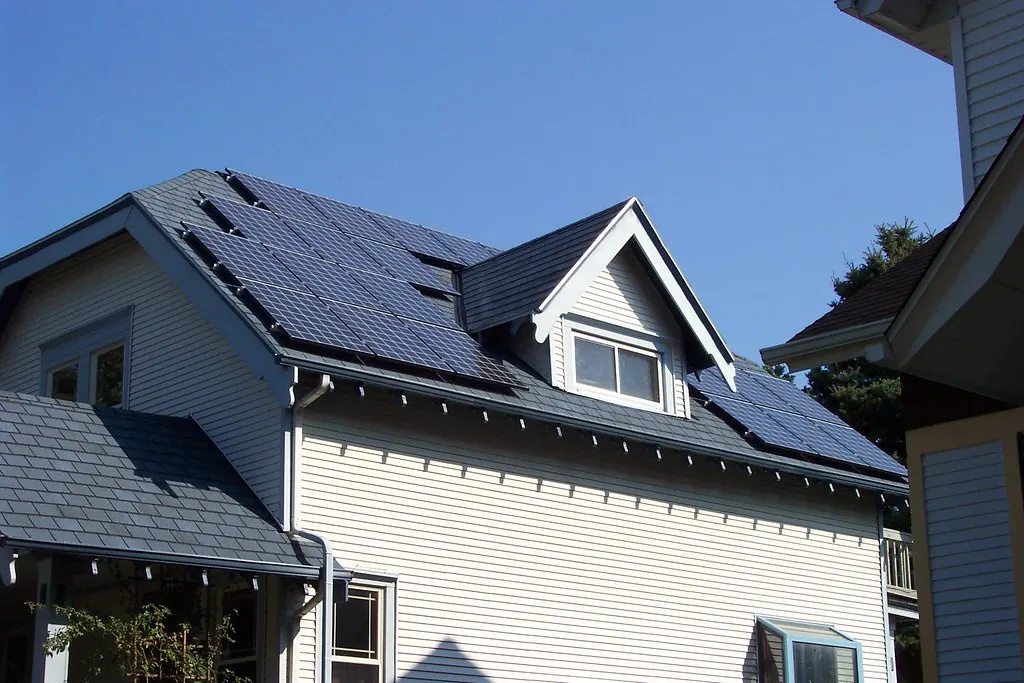
First: do you own it, or is it leased?
Everything else follows from this one question, so be certain before you start making calls. Check the original paperwork rather than going from memory: owners are frequently surprised.
- Owned outright, or financed with a loan — the equipment is yours and is part of the property. The surviving equipment warranties travel with it. This is the case the rest of this page is about.
- Leased, or on a power purchase agreement (PPA) — you do not own the hardware. Nothing transfers by itself; the finance company, now usually SunStrong, has to assign the agreement to the buyer. Start that paperwork much earlier than feels necessary: sellers regularly report it running past their closing date.
On a lease or a PPA? Know this before you spend anything: SunStrong includes its Premium monitoring tier free for lease and PPA customers (checked August 2026). You already have the monitoring.
This page's second half is not for you, and we would rather say so here than after you had bought something.
What survived, and what transfers with the house
SunPower filed for Chapter 11 in 2024 and all official support ended on September 20, 2024. The company warranty (the workmanship and whole-system coverage SunPower itself provided) went with it, and the rebranded SunPower does not assume it.
What survived is the equipment coverage from the companies who actually made the components. Those warranties attach to the hardware, so they generally follow the property.
The catch is that what used to be one obligation is now several, each with its own terms:
- Enphase (microinverters) — honored, but parts only. Labor coverage was eliminated.
- Maxeon (panels) — honored, but required self-registration by December 31, 2024. That deadline has passed for many owners.
- Qcells, Fronius, REC, and Fimer — equipment only, excluding labor and shipping.
Ask each manufacturer directly what they need from a new owner. We are not a party to your coverage and cannot tell you what any of them will decide.
The question is usually answered in one phone call, and asking costs nothing. More detail on each: who honors what after the bankruptcy.
The document nobody can produce
Here is where an orphaned system actually costs someone money at closing.
A buyer's reasonable question is "does it still work, and how well?" Before September 2024 the answer was a screenshot from the app.
Now most sellers have no way to answer at all. The app is gone, and the gateway on the wall keeps the data to itself. A working system and a dead one look identical from the driveway.
That asymmetry lands on whoever has less information:
- A seller with no production record is negotiating against a buyer's worst assumption.
- A buyer with no record is guessing about the most expensive thing on the roof.
It is evidence, not an opinion.
What a production record is, and what it is not
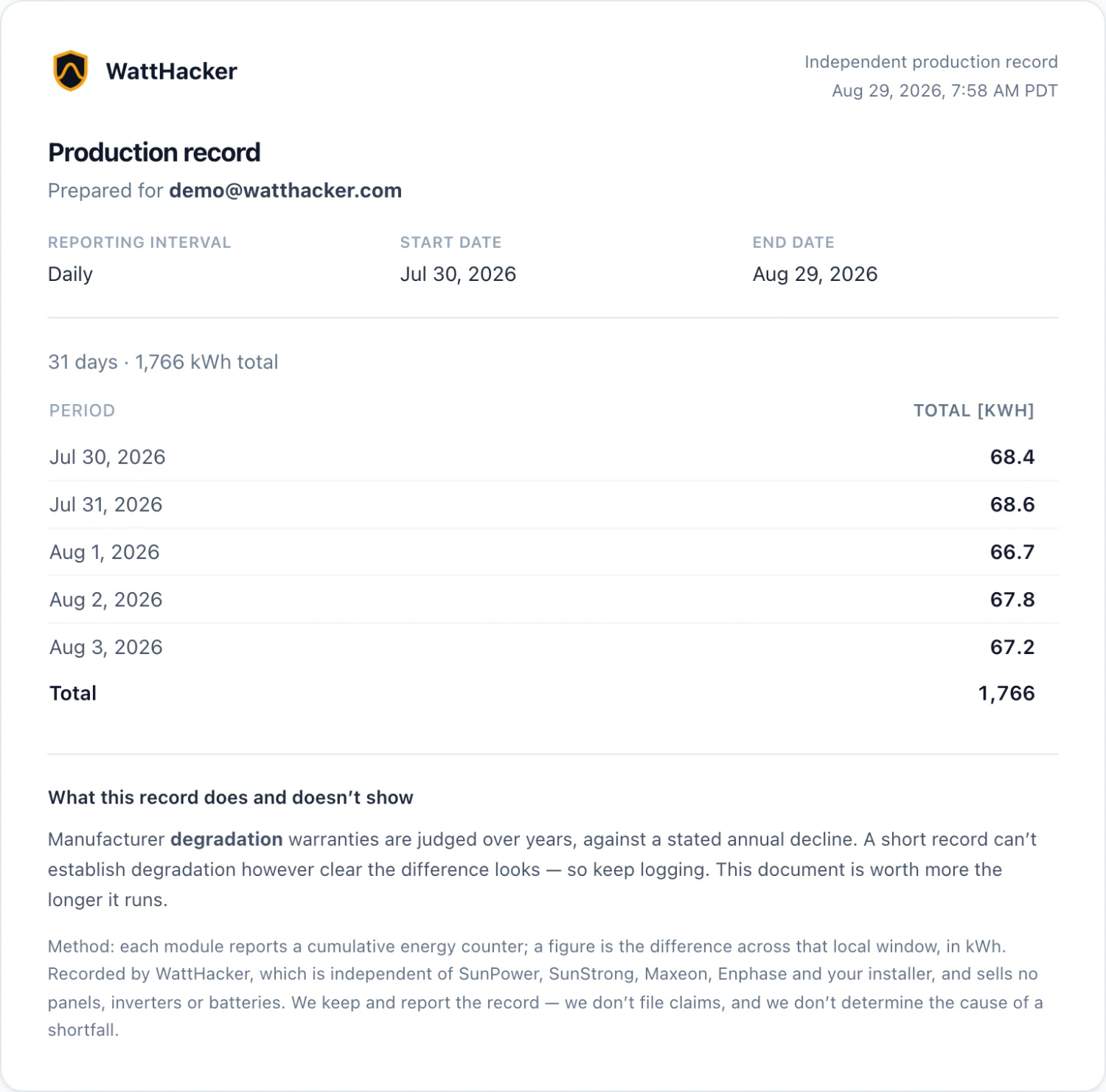
A production record is simply the measured history of what each panel produced, prepared as a document you can hand to somebody: a buyer, an agent, an inspector, an installer, or a manufacturer.
It is evidence, not an opinion. It does not diagnose a fault, it does not tell you whether a warranty claim will succeed, and it is not a valuation.
It says what the equipment did, with dates. That is the part missing today, and the part everyone downstream actually needs.
You can get that record from anything that reads the gateway on your own network, including the free open-source Home Assistant integrations if you are technical.
A short checklist for either side of the sale
- Find the original installation contract. It is the only document that reliably names the panel, microinverter, and gateway manufacturers, and it is the first thing every warranty conversation asks for.
- Write down the gateway serial number and the panel and microinverter models.
- Call each manufacturer and ask what a change of ownership requires. Do it before closing, not after.
- If it is leased or a PPA, start the assignment immediately — before the house is even listed, if you can.
- Get a production record together so the system's condition is a document rather than a debate.
Where WattHacker fits
The WattHacker monitor is a small box that plugs into your existing SunPower PVS5 or PVS6 gateway on your own home network and reads it directly. It doesn't rely on SunPower's or SunStrong's servers, because for owners like you those are either gone or behind a paywall. No technician, no electrician, no rewiring — you plug it in yourself.
- The monitor is $50 once, with a 30-day money-back guarantee.
- Free to see your panel data, forever — every panel, live, no subscription, and no card on file.
- An optional premium plan at $6/mo (billed annually) adds the memory: full history kept for good, year-over-year comparison, and alerts told to you in dollars.
- Built by an electrification superfan who wants to help others use their solar smarter, lower their utility bills, and clean up the planet. Who's behind it.
Still have questions about your own system? I'll go through it with you — your panels, your bill, and what's worth doing about it.
Book an energy reviewHave SunPower? See how it works, or see a demo.
Real panels, real production.
Common questions
Does a SunPower warranty transfer to the new homeowner?
It depends what you actually have. SunPower's own company warranty ended with the Chapter 11 filing and the September 2024 shutdown, so there is nothing left there to transfer. The equipment warranties from the manufacturers who made the parts — Enphase, Maxeon, Qcells, Fronius, REC, and Fimer — did survive, and they attach to the hardware rather than to the person. In practice they usually follow the house, but each manufacturer sets its own transfer and registration rules, so check each one individually rather than assuming.
What is the difference between a transfer and an assignment?
If you own the system outright, the equipment is part of the property and its warranties go with it. If the system is leased or on a power purchase agreement, you do not own it — the finance company does — and the agreement has to be formally assigned to the buyer. That is a paperwork process run by the lease company, on their timetable, and owners routinely report it taking longer than the escrow window allows.
I am buying the house. What should I ask the seller for?
The original installation contract, the make and model of the panels and the microinverters, the gateway serial number, any warranty registrations already completed, and whatever production history exists. Panels, microinverters, and gateway are frequently three different manufacturers, and the contract is usually the only document that says which.
Do I need to re-register the warranty in my name?
Possibly, and it is worth asking each manufacturer directly. Maxeon, for example, required owners to self-register panel warranties by December 31, 2024 — a deadline many owners never heard about. Do not assume the answer is no, and do not count on coverage until someone at the manufacturer confirms it.
The monitoring app stopped working. Does that affect the sale?
It does not change what is covered, but it does change what you can show. After the September 2024 shutdown most owners lost any way to demonstrate the system is producing, which leaves a buyer taking it on trust and a seller with nothing to point at. Any tool that reads the gateway locally can produce that record again.
See your own panels, live.
See plans Try the demo Back to home