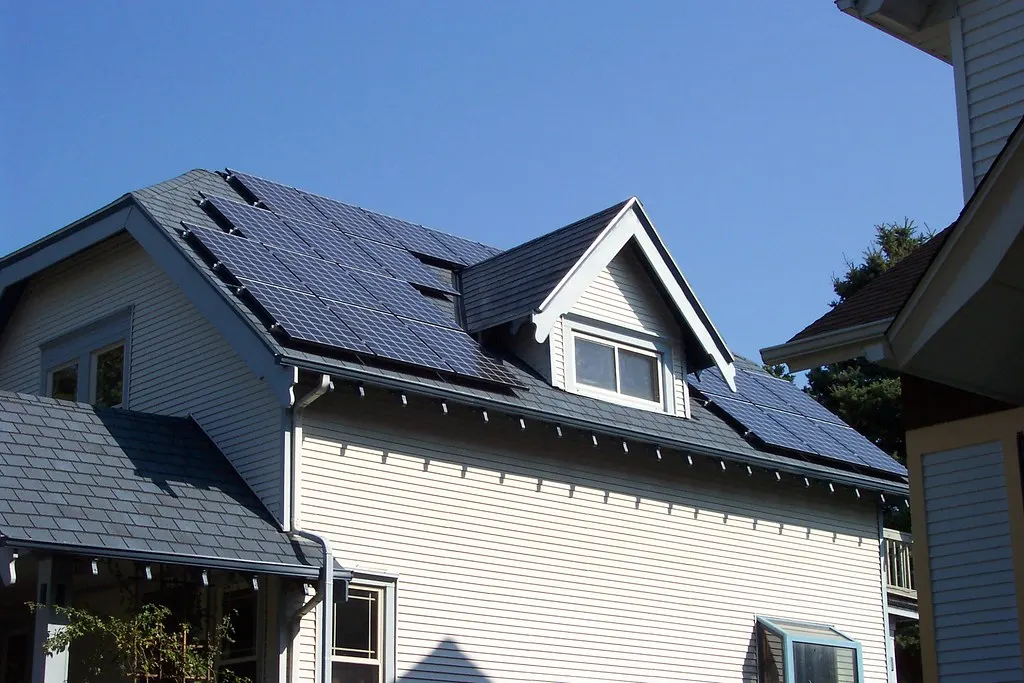
Two ways to heat water with the sun
- A solar water heater uses sunshine to heat or preheat your water directly, with its own collectors on the roof. ENERGY STAR says a certified one can cut your yearly hot water costs in half, and that it's generally designed to work with a gas or electric backup heater.
- Solar panels plus a heat pump water heater. Your panels make electricity. The heat pump water heater turns each unit of it into about four units of heat, pulled from the air around it.
If you already have panels, the second route needs nothing new on the roof.
How the sunlight reaches your tank
A solar panel turns about 20–25% of the sunlight that hits it into electricity. A heat pump multiplies that by about 4, because it moves heat out of the air instead of making it.
What it saves
Compared with a standard electric water heater, ENERGY STAR estimates a certified heat pump water heater saves:
That's electricity your panels no longer have to cover, so more of what they make is left for the rest of the house, or for sending to the grid.
If you already have panels, the second route needs nothing new on the roof.
Side by side
| Solar water heater | Panels + heat pump water heater | |
|---|---|---|
| On the roof | Its own collectors | The panels you already have |
| Cloudy days | Generally needs a gas or electric backup | Runs on grid power, like any appliance |
| Freezing weather | Needs a closed-loop or drain-back design where it often drops below 42°F | Indoor unit. Works best in a space that isn't cold |
| Upkeep | Yearly inspection by a contractor, per ENERGY STAR | Nothing extra on the roof to look after |
Make it run on your own sunshine
A heat pump water heater has a tank, so you choose when it heats. Do most of the heating in the early afternoon, when your panels make the most, and let the tank carry you through the evening.
On a time-of-use plan, that's also when power from the grid is cheapest. The full schedule is in Make your water heater into a thermal battery.
What would it save in your home?
The answer depends on your electric plan, how many people live with you, and what you're replacing. Our free calculator works it out from your ZIP code in about 2 minutes, with the rebates you qualify for.
Smarter water heating, on the same screen as your solar
The WattHacker app connects to Rheem EcoNet heat pump water heaters (A.O. Smith and GE are in early pilot). It shows when yours is heating, what it's set to, and the schedule it's following, and it lets you change the temperature or boost it. With the WattHacker monitor on your solar, you can see whether your hot water is being made from your own sunshine.
- Have SunPower or Enphase solar? The WattHacker monitor is $50, no subscription. It puts your hot water and your solar on one screen.
- No extra hardware for the water heater. You sign in with the account you already use for your heater's app.
- The WattHacker monitor reads your SunPower or Enphase solar directly, so heating time and solar production sit on the same clock.
- Built by someone who heats his own water this way.
Still have questions about your own system? I'll go through it with you — your panels, your bill, and what's worth doing about it.
Book an energy reviewAre your panels installed by SunPower or Enphase? See how it works for SunPower or Enphase, or see a demo.
Real panels, real production.
Common questions
Is a heat pump water heater or a solar water heater better if I have solar panels?
If you already have solar panels, a heat pump water heater usually makes more sense: it runs on electricity your panels already make, needs no second set of collectors on the roof, and heats water on cloudy days too. A solar water heater heats water directly with its own collectors and is generally paired with a gas or electric backup heater.
How much electricity does a heat pump water heater save?
ENERGY STAR estimates a certified heat pump water heater saves about 3,760 kWh a year for a household of four compared with a standard electric water heater, 2,820 kWh for three people, and 1,880 kWh for two.
Can I run a heat pump water heater on my solar panels?
Yes, in effect. It plugs into your home's electricity like any appliance, so whatever your panels are producing while it heats goes into the water first. Schedule most of the heating for the early afternoon, when the panels produce the most, and the tank carries you through the evening.
Does a solar water heater need a backup?
Generally, yes. ENERGY STAR says certified solar water heaters are generally designed for use with an electric or gas backup water heater, for cloudy days and heavy use.
See your own panels, live.
See plans Try the demo Back to home