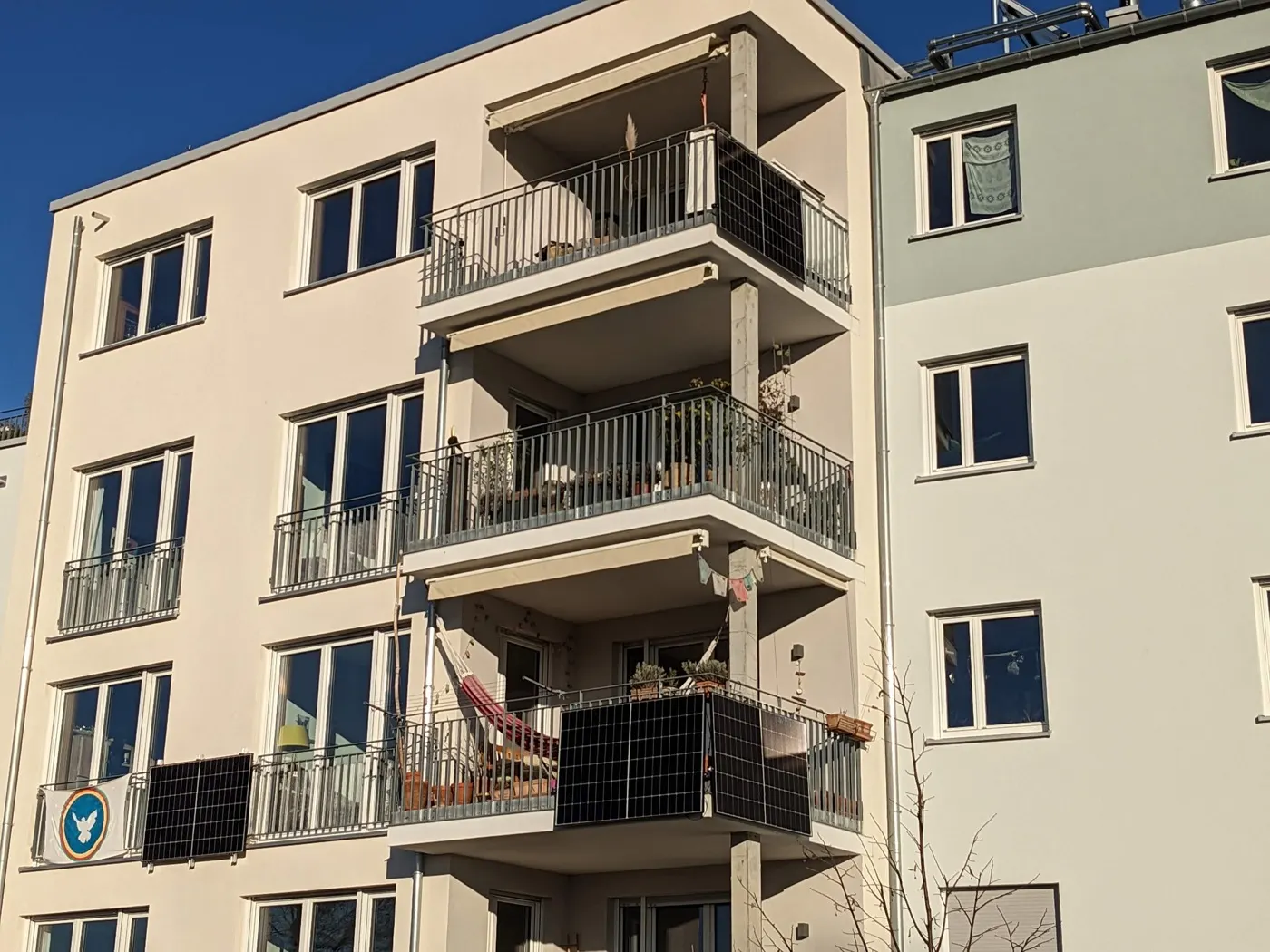
A plug-in solar kit is a panel or two, a small inverter, and a cord. Hang it on a railing, plug it in, and it starts feeding your home.
Kits sold in the U.S. cost a few hundred dollars to a few thousand. A rooftop system costs tens of thousands. That makes the kit look like a bargain.
But a kit is also much smaller. So the fair test is what each costs per watt, and then what each costs per kilowatt-hour it actually makes.
Per watt, the kit wins
Watt for watt, kits are cheaper. You pay for the parts and shipping, with no installer, permit, or roof work.
Kit prices vary a lot. Bright Saver, a nonprofit, sells at cost to members who pay $29 a year. Craftstrom's 1,200 W kit runs $2,391. EcoFlow's 400 W kit listed at $799 but was sold out when we checked.
The fair test is what each costs per kilowatt-hour it actually makes.
Per kilowatt-hour, it's close
A rooftop panel is tilted toward the sun. A balcony panel usually hangs straight down, and loses a lot for it.
In Los Angeles, a panel on a south-facing railing makes about 60% of what the same panel makes tilted at 30°. See the numbers by city.
So spread each system's price over every kWh it makes in its lifetime:
Both are a fraction of what the grid charges. That's the real case for either.
The catch: power you don't use
A plug-in kit saves money only when something in your home uses its power at the moment it's made. The rest flows out through your meter.
No state plug-in law we read pays you for it. Utah, Virginia, Maine, and New Hampshire keep kits out of net metering outright.
A small kit is mostly used at home. A big one often isn't:
A bigger kit makes more power, but on a sunny afternoon your fridge, router, and TV can only use so much of it. Bright Saver's kits stop at 360 W for a different reason, what an ordinary outlet circuit can safely take, but it means almost all of their power gets used at home.
How long until it pays for itself
Our estimate for Los Angeles, panels on a south-facing railing, at California's average rate of 34¢ per kWh:
- 360 W kit, member price: about 3 to 4 years. It saves about $116–$129 a year.
- 360 W kit, list price: about 5 to 6 years.
- 1,200 W kit: about 9 to 14 years. At the U.S. average rate, 16 to 26 years.
The range depends on how much your home runs in the daytime. Lower rates, more shade, or a panel facing east or west all stretch it out.
Work out yours: the balcony solar predictor uses your ZIP, your balcony's direction, and your own electric plan.
What changed for rooftop solar
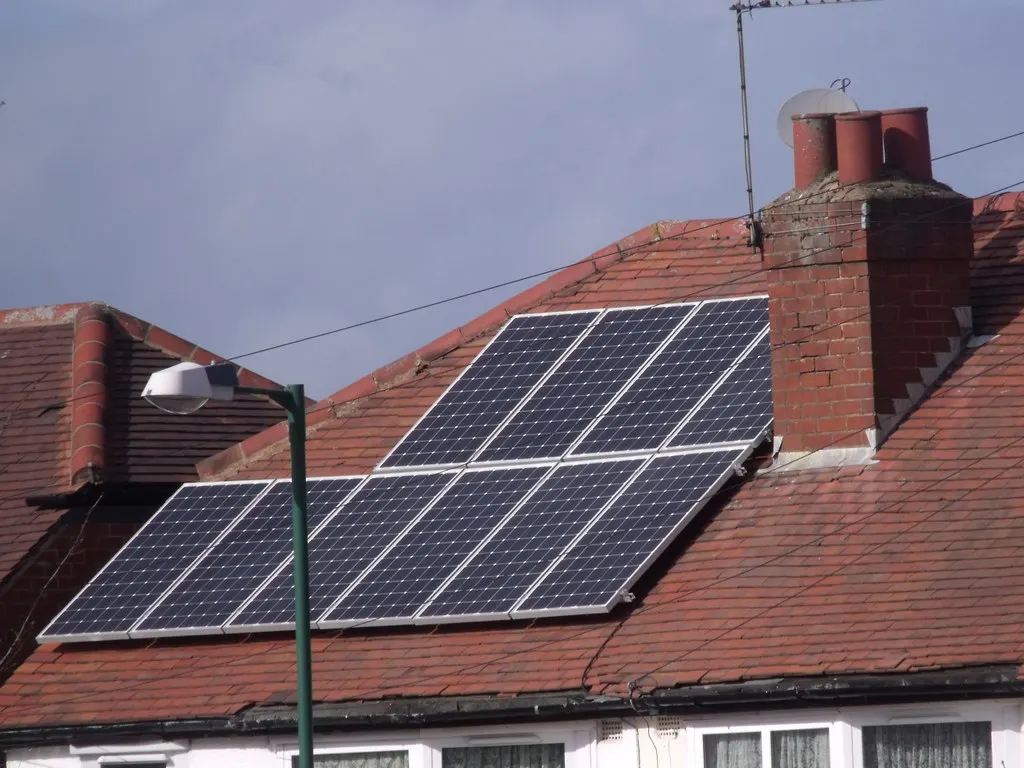
Rooftop solar lost its biggest discount this year. The 30% federal credit for homeowners ended for systems installed after December 31, 2025.
A rooftop system also needs a permit, an inspection, and your utility's permission to operate. A qualifying plug-in kit, in a state that has passed a plug-in law, needs no permission to operate, and often no permit. Check your state.
And rooftop solar under net metering gets credit for what it sends to the grid. A plug-in kit doesn't.
The bottom line
A small kit that your home uses all of is as cheap as rooftop solar. A big kit only pays if someone is using power while the sun is out.
Already have solar on the roof?
Before you buy a plug-in kit, find out whether your house is already sending power to the grid at midday. If it is, a plug-in kit mostly adds to that export instead of cutting your bill. The WattHacker monitor shows your rooftop production live, panel by panel. It plugs into the SunPower or Enphase gateway you already own.
- Home use is shown too where your system was installed with consumption meters. Without them you see production only. Your utility's hourly usage download also shows export.
- A plug-in kit is a separate inverter. Your rooftop gateway will not count its production, so neither will we.
- Free to see your panel data, with no subscription. The monitor is a one-time purchase with a 30-day money-back guarantee.
Still have questions about your own system? I'll go through it with you — your panels, your bill, and what's worth doing about it.
Book an energy reviewAre your panels installed by SunPower or Enphase? See how it works for SunPower or Enphase, or see a demo.
Real panels, real production.
Common questions
How much does balcony solar cost per watt?
Plug-in kits sold in the U.S. ran from about $1.23 to $1.99 per watt of panels in October 2026. That is Bright Saver's 360 W kit at its member price plus a year's membership ($1.23) or its list price ($1.94), and Craftstrom's 1,200 W kit ($1.99). Some oversized kits list lower but were sold out.
How much does rooftop solar cost per watt?
About $2.60 to $3.36 per watt installed, before incentives. EnergySage's average marketplace quote was $2.60 in mid-2026; SEIA and Wood Mackenzie put the typical residential price at $3.36 for spring 2026. Lawrence Berkeley National Laboratory's 2025 median, for systems the homeowner owns, was $3.60.
Is balcony solar cheaper per kWh than rooftop solar?
About the same. A panel hung on a railing makes far less than one tilted on a roof, which cancels most of its lower price. Spread over its life in Los Angeles, a 360 W kit works out to about 6¢ to 9¢ per kWh; a rooftop system at $3.36 a watt about 8¢. Both beat buying from the grid, at 18¢ on average and 34¢ in California.
How long does balcony solar take to pay for itself?
It depends on your electric rate and on how much of the kit's power your home uses as it's made. Our estimate for a 360 W kit in Los Angeles at California's average rate is 3 to 4 years at the member price and 5 to 6 at list. A 1,200 W kit takes 9 to 14 years there and 16 to 26 at the U.S. average rate, because more of its power flows out unpaid.
Can I get the 30% federal tax credit for balcony solar?
No. The residential clean energy credit (Section 25D) ended for anything installed after December 31, 2025. The law counts the cost when installation is completed, so paying in 2025 for a 2026 install does not qualify. That applies to rooftop systems you buy, too.
See your own panels, live.
See plans Try the demo Back to home